A cluttered garage can make everyday tasks harder. Tools become difficult to find, dust collects on stored belongings, and small spills can turn into stubborn stains. The solution is not simply to move everything into boxes. You need a cleaning routine that makes the space easier to use and maintain.
Garage cleaning starts with removing clutter, sorting stored items, and checking for safety hazards. Dust shelves and walls before sweeping and cleaning the floor. Store tools in labeled containers, keep chemicals in suitable secure locations, and dispose of hazardous waste properly. A short monthly cleanup helps maintain a safer, more organized garage. This guide to garage cleaning advice livpristhouse explains how to declutter your garage, clean different surfaces, handle common messes, and organize belongings without spending money on unnecessary storage products. Whether you use your garage for parking, home repairs, gardening, or storage, a practical plan can help you get more from the space.
Why Regular Garage Cleaning Matters
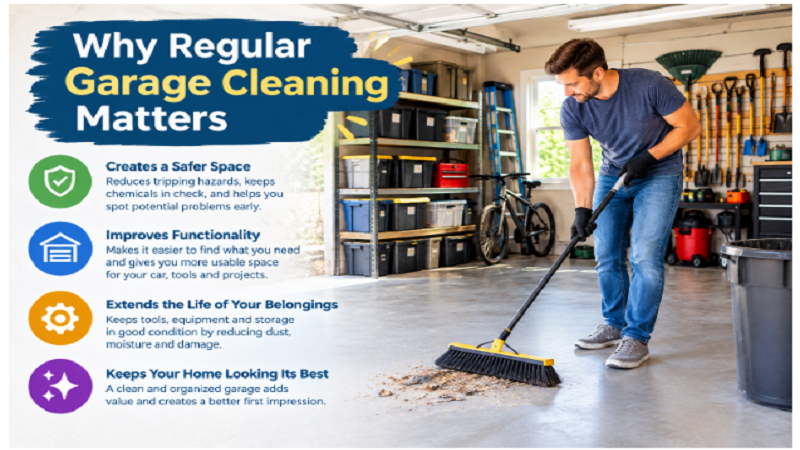
Garages often serve several purposes at once. They may hold vehicles, bicycles, garden tools, seasonal decorations, paint, and household supplies. Without a clear system, these items can gradually take over the available floor space.
Regular cleaning helps you identify unused belongings, notice leaks or moisture problems, and keep frequently used equipment accessible. It also gives you an opportunity to check shelves, storage containers, and walking paths for potential hazards.
The goal is not to make your garage look perfect. It is to create a space where you can park, work, and find what you need without moving unnecessary items.
1. Prepare Before You Start Cleaning
Before moving boxes or using cleaning products, take a few minutes to plan the job.
Gather basic cleaning supplies
Most routine garage cleaning can begin with supplies you already have at home.
- A sturdy broom and dustpan
- A vacuum suitable for garage debris
- Microfiber cloths and a scrub brush
- Mild detergent and a bucket
- Suitable protective gloves and eye protection
- Heavy-duty rubbish bags
- Storage containers and labels
Choose cleaning products according to the surface and type of dirt. Check product labels before use, especially when dealing with oil, grease, paint, or other chemical residues.
Open the garage door when it is safe to do so and provide fresh air. Keep children and pets away from cleaning products, tools, and work areas.
Inspect the garage for hazards
Look for water leaks, damaged electrical cords, loose shelves, broken glass, pest activity, and containers that may be leaking. Deal with these problems before beginning routine cleaning.
Do not vacuum flammable liquids or use ordinary household equipment to collect unknown chemical spills. If a spill presents a fire, chemical, or electrical hazard, keep people away and seek appropriate professional assistance.
2. Declutter Before You Organize
One of the most useful parts of garage cleaning advice livpristhouse is to remove unnecessary items before deciding where everything belongs.
Start with one manageable section, such as a workbench, a shelf, or one wall. Empty that area and sort its contents into four groups:
- Keep: Items you use or genuinely need.
- Donate or sell: Usable belongings that no longer serve a purpose.
- Recycle: Materials accepted by your local recycling service.
- Dispose safely: Broken or unwanted items that require special handling.
Avoid emptying the entire garage onto the driveway if you do not have enough time or suitable weather to finish. Working in smaller sections makes it easier to restore order before the day ends.
Check old paint, automotive fluids, batteries, pesticides, and cleaning products separately. Some may require special disposal rather than ordinary household rubbish. The US Environmental Protection Agency explains the risks and proper handling of household hazardous waste in its official disposal guidance.
3. Clean From the Top Down
Cleaning in the correct order prevents dust from settling on areas you have already finished.
Remove cobwebs and dust
Start with ceiling corners, light fittings, exposed beams, and the upper parts of walls. Use an appropriate duster or vacuum attachment to collect loose dust and cobwebs.
If dust is heavy, avoid sweeping it into the air unnecessarily. Use suitable eye protection and respiratory protection when the conditions call for it. Do not disturb suspected asbestos-containing materials or other potentially hazardous building materials.
Wipe shelves, cabinets, and workbenches
Remove loose items from each surface before wiping it down. Use a cloth with an appropriate cleaning solution, then dry surfaces as needed.
Pay attention to handles, cabinet edges, workbench corners, and areas where dirt collects around stored equipment. Check the contents of containers before returning them to their places.
Clean doors and frequently touched surfaces
Wipe suitable door handles, cabinet pulls, switches, and the inside of the garage door where accessible. Avoid soaking electrical switches, outlets, sensors, or opener components.
Follow the manufacturer’s instructions when cleaning garage door equipment. Do not dismantle springs, cables, or other high-tension components as part of a routine cleaning task.
4. Clean the Garage Floor Properly
 Garage floors collect dust, grit, mud, tire marks, and occasional oil drips. The right cleaning method depends on whether your floor is bare concrete, sealed concrete, painted concrete, or an epoxy-coated surface.
Sweep or vacuum loose debris
Remove leaves, sand, dust, and other loose material first. Move lightweight items out of the way so you can reach corners and the areas along the walls.
Use equipment designed for the type of debris involved. Ordinary vacuums are not suitable for every workshop material or hazardous substance.
Wash the floor with a suitable cleaner
For ordinary dirt, use a compatible detergent and a scrub brush or mop. Follow the cleaning product’s dilution instructions and test it on a small, inconspicuous area if you are unsure how the surface will react.
Avoid flooding the floor, especially near electrical equipment, wall outlets, or areas where water can enter the building. Remove excess water and allow the surface to dry before returning stored items.
Remove oil and grease stains
Fresh oil spills are easier to address when handled promptly and safely. First, keep people away from the slippery area. If the liquid is known to be ordinary motor oil and there is no additional hazard, use an absorbent material suitable for oil spills and follow its disposal instructions.
For an existing stain, apply a concrete-compatible degreaser according to its label. Scrub as directed and rinse only when the product instructions allow it.
Old oil stains may remain visible even after cleaning because oil can penetrate porous concrete. Repeatedly using stronger chemicals is not always the answer. Check the floor finish and cleaner compatibility before trying another treatment.
Never wash oil, fuel, solvents, or concentrated cleaning chemicals into a storm drain, onto the ground, or into a household drain. Follow local disposal requirements.
5. Organize Tools and Stored Belongings
A clean garage becomes easier to maintain when every frequently used item has a clear place.
Create practical storage zones
Group similar belongings together instead of scattering them across shelves. For example, you could create separate areas for:
- Hand tools and repair supplies
- Gardening equipment
- Automotive accessories
- Sports and outdoor equipment
- Seasonal decorations
- Household maintenance supplies
Place frequently used items where they are easy to reach. Keep heavy objects on lower shelves and make sure storage units are stable and appropriate for their loads.
Wall-mounted hooks and sturdy shelving can free up floor space, but they must be installed correctly for the wall type and intended weight. Overhead storage should be securely mounted and kept clear of garage door tracks and moving parts.
Use labeled containers
Containers help keep small objects together and reduce dust on stored belongings. Clear containers can make their contents easier to identify, while labels help when items are stored out of sight.
Choose containers suited to the items inside. Keep paper, fabrics, and other moisture-sensitive belongings away from damp floors. Do not store food in places where pests or chemicals could contaminate it.
Keep hazardous products in their original, labeled containers with lids secured. Follow the product label for storage temperature, ventilation, and separation requirements. Keep them away from children, pets, ignition sources, and incompatible materials.
6. Improve Airflow and Address Musty Smells
A persistent musty smell can indicate damp materials, poor ventilation, a hidden leak, or mold growth. Covering the smell with an air freshener will not correct the underlying problem.
Check the walls, roof, windows, and floor edges for signs of moisture. Look for water marks, condensation, damaged weather seals, or belongings that feel damp.
Improve ventilation when conditions permit, and dry wet surfaces promptly. If mold is present, follow appropriate safety guidance and correct the moisture source. The Centers for Disease Control and Prevention advises against mixing cleaning products and recommends fresh air during cleaning. Read its mold cleanup guidance before tackling a mold problem.
Large areas of mold, recurring dampness, contaminated floodwater, or mold affecting porous building materials may require professional assessment. Do not simply paint over visible mold and assume the problem has been resolved.
7. Make Garage Cleaning a Regular Habit
A large cleanout is less demanding when small tasks are completed consistently. The best schedule depends on how often you use the garage, how much dust enters it, and what you store there.
A simple routine can help:
| Frequency | Cleaning task |
| Weekly or as needed | Remove loose rubbish and return tools to their places. |
| Monthly | Sweep the floor, wipe work surfaces, and check for leaks or clutter. |
| Seasonally | Clean shelves, review stored belongings, and inspect for moisture or pests. |
| When needed | Address spills promptly and inspect damaged storage or equipment. |
These intervals are practical starting points, not universal safety requirements. Adjust them to suit your garage and local conditions.
For a quick reset, set aside a short period to clear the main walkway, put away loose tools, and remove rubbish. You do not need to reorganize the entire garage every time you clean it.
8. Common Garage Cleaning Mistakes to Avoid
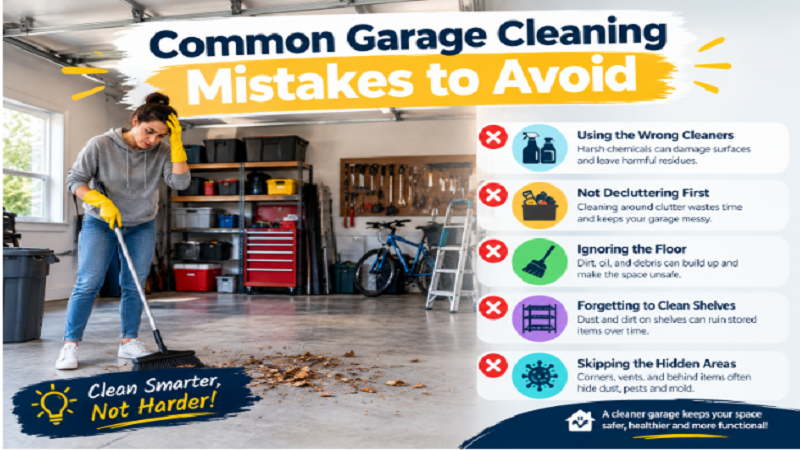
Even a well-intentioned cleanup can create more work or introduce safety risks.
Buying storage before decluttering: You may purchase containers for things you do not need. Sort first, then buy only what solves a real storage problem.
Cleaning the floor first: Dust from shelves and walls can settle on the floor afterward. Work from higher surfaces down to the floor.
Mixing cleaning chemicals: Combining bleach with ammonia or other cleaners can release dangerous vapors. Use products separately and follow their labels.
Ignoring small leaks: A small oil drip or damp patch can become a recurring problem. Identify the source rather than repeatedly cleaning the same spot.
Blocking access and walkways: Keep doors, electrical panels, fire extinguishers, and essential routes accessible. Store items so they cannot easily fall or obstruct movement.
Keeping unidentified chemicals: Do not use or casually discard unmarked containers. Avoid opening them to identify their contents. Seek guidance from an appropriate waste or hazardous-materials service.
Conclusion
Effective garage cleaning is about more than sweeping the floor. It involves removing unnecessary belongings, cleaning surfaces in the right order, handling stains safely, and creating a storage system that suits everyday use.
The most useful garage cleaning advice livpristhouse can offer is to work in manageable sections, solve moisture and spill problems at their source, and return items to designated places after each use. A short, consistent maintenance routine can help keep the garage cleaner, safer, and more functional throughout the year.
7. FAQ section
What is the easiest way to clean a messy garage?
Start by clearing one section at a time. Remove rubbish, sort belongings, dust shelves and walls, and clean the floor last. Organize the remaining items by category and give frequently used tools an accessible storage place.
How often should a garage be cleaned?
Light cleaning can be done weekly or as needed, while a more thorough cleaning can be scheduled seasonally. The ideal frequency depends on how often the garage is used and how quickly dust, dirt, or clutter builds up.
How do you remove oil stains from a garage floor?
Absorb a fresh, known oil spill with suitable absorbent material. For older stains, use a degreaser compatible with the floor surface and follow its instructions. Some old stains may remain visible because oil can penetrate concrete.
How can I keep my garage organized?
Create separate storage zones for tools, gardening supplies, automotive products, and seasonal belongings. Use labeled containers and secure shelving, keep heavy items low, and return tools to their designated places after use.
How can I remove a musty smell from my garage?
Look for leaks, damp belongings, condensation, and mold. Improve ventilation when appropriate and dry wet materials. If mold is extensive or keeps returning, investigate the moisture source and consider professional assistance.